What Are Standard Sizes?
Standard-size car parking shades are pre-designed and manufactured to common measurements that suit typical vehicles and parking spaces. For example:
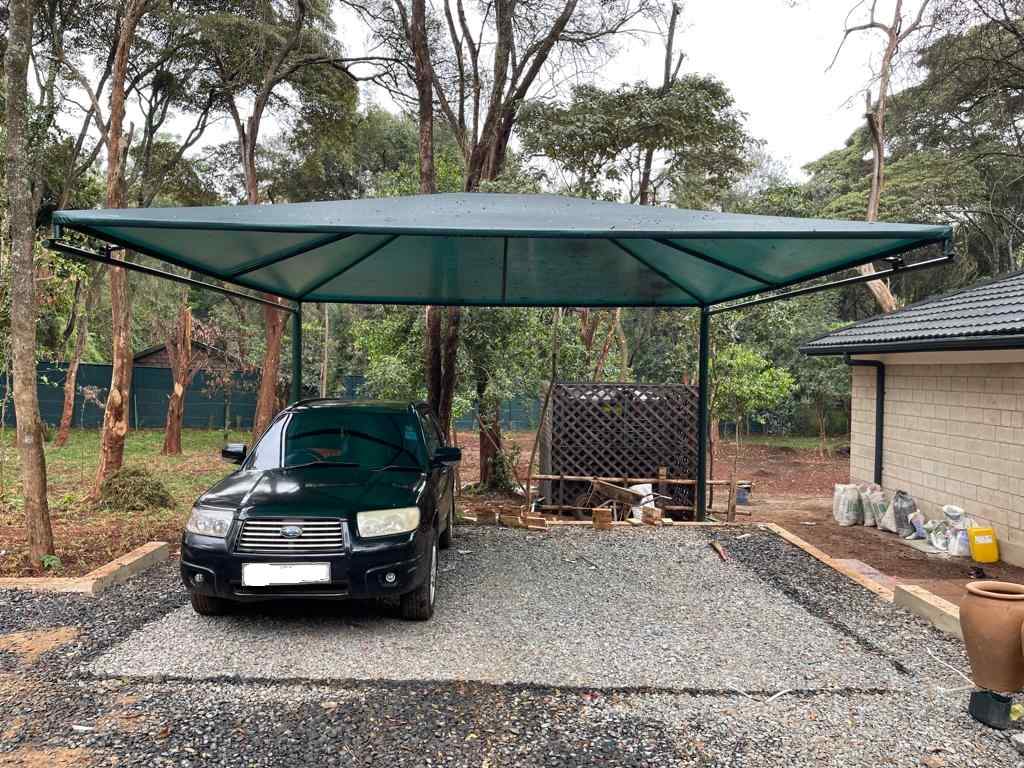
- Single-bay shades: Usually measure around 3–3.5 meters in width and 5–6 meters in length, suitable for one car.
- Double-bay shades: Typically 6–7 meters wide and 5–6 meters long, accommodating two vehicles side by side.
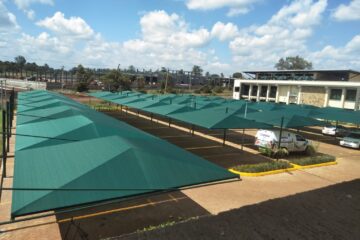
These shades come in ready-made designs, often featuring simple cantilever or pyramid structures, lightweight steel frames, and commonly used shade fabrics such as HDPE (High-Density Polyethylene) nets. Because they are pre-fabricated, installation is straightforward and quicker than custom solutions.
Where They Are Commonly Used
Standard-size shades are ideal for locations where parking needs are relatively uniform:
- Residential homes with single or double garages.
- Small businesses that have a few vehicles or customer parking bays.
- Apartments or gated communities with repetitive parking layouts.
Their affordability and quick installation make them a practical choice for these typical setups.
What Makes a Shade “Custom”?
Custom car parking shades are designed and built to meet specific requirements that standard shades cannot always accommodate. Key features include:
- Custom dimensions: Tailored to fit irregular or limited spaces.
- Material choices: Options for stronger steel frames, UV-resistant fabrics, waterproof coatings, or reinforced structures.
- Design variations: Unique shapes, angled or multi-level canopies, and integration with landscaping.
Essentially, any element—size, shape, materials, or color—can be adapted to suit the client’s exact needs and site conditions.
Ideal Use Cases
Custom shades are most useful when standard options fall short. Typical scenarios include:
- Unusual layouts: Narrow lanes, uneven ground, or sloped areas.
- Limited spaces: Where maximizing coverage requires precise measurements.
- Commercial lots, large compounds, malls, or institutions: High-traffic areas needing durable and aesthetically pleasing shade structures.
Custom shades provide flexibility and functionality for spaces where standard models may not fit efficiently or look cohesive.
Pros & Cons of Standard-Size Car Parking Shades
Pros
- Affordable pricing: Standard shades are mass-produced, which keeps costs lower compared to custom solutions.
- Faster manufacturing and installation: Ready-made sizes mean you can install them quickly without long fabrication periods.
- Easy replacement or repair: Standard components are widely available, making repairs simpler and cheaper.
- Predictable performance: Designs are tested for typical vehicle sizes and standard environmental conditions, ensuring reliability.
Cons
- Limited design choices: Standard shades offer fewer style and structural options.
- May not fit irregular spaces: Non-uniform parking lots or sloped areas may require adjustments or compromise coverage.
- Less flexibility in height, width, and coverage: You might not fully optimize space for multiple or oversized vehicles.
- May not match home or building aesthetics: Pre-made designs might not blend seamlessly with the property’s architecture.
Pros & Cons of Custom Car Parking Shades
Pros
- Perfect fit for any space: Custom dimensions allow full utilization of available parking areas, even irregular ones.
- Greater design freedom: Options include cantilever, dome, V-shape, or tensile structures tailored to your preference.
- Options for premium materials and thicker steel: Ensures durability, longevity, and enhanced resistance to weather conditions.
- Enhanced aesthetic and architectural appeal: Can complement the design and style of your property.
- Can maximize vehicle coverage and airflow: Optimized design ensures better protection and ventilation for vehicles.
Cons
- Higher cost: Custom fabrication and materials increase the initial investment.
- Longer fabrication time: Creating a tailored design takes more time than using standard pre-made shades.
- Requires professional site assessment: Measurements and design planning need expert evaluation.
- Complex repair or replacement if damaged: Unique designs and materials may make maintenance more challenging.
Performance Comparison
Heat & UV Protection
Custom car shades allow for strategic orientation and fabric selection, which can significantly reduce heat buildup under the canopy. Using denser HDPE or PVC fabrics and adjusting angles to block direct sunlight can lower vehicle surface temperatures. Standard shades typically use pre-selected fabrics with UV ratings of 80–90%, providing adequate protection but less optimization for specific sun exposure patterns.
Structural Strength & Durability
Custom shades often use thicker steel frames, reinforced joints, and deeper foundation anchoring, making them suitable for heavy rain, wind, or long-term use. Standard shades usually employ lighter steel and shallow foundations, which are sufficient for typical residential conditions but may be less durable in extreme weather or high-traffic areas.
Aesthetic Flexibility
Custom designs offer wide flexibility in frame color, fabric pattern, and overall shape, allowing shades to complement property architecture. Standard shades, on the other hand, come in limited colors and standard shapes (cantilever or pyramid), which may not blend seamlessly with all building designs.
Suitability for Windy or Coastal Areas
In areas prone to strong winds or salty coastal air, custom shades can be reinforced with stronger frames, anchoring, and corrosion-resistant materials. Standard shades have limited reinforcement options, making them less ideal for such challenging environments.
Pricing Breakdown (Kenyan Market Overview)
Standard-Size Car Shades Pricing
- Typical price range per bay: KES 25,000–50,000 for a single bay; KES 45,000–90,000 for a double bay.
- What’s included: Steel frame, HDPE fabric, basic installation, and standard anchoring.
- Cost depends on local supplier rates, site accessibility, and minor optional features like color or waterproof coating.
Custom Car Shades Pricing
- Pricing factors:
- Size: Larger or irregular dimensions increase material and labor costs.
- Steel thickness: Thicker frames add strength and longevity but also cost more.
- Fabric type: HDPE is standard; PVC or waterproof variants are more expensive.
- Design complexity: Unique shapes, multi-level structures, or cantilever designs increase fabrication time.
- Ground conditions: Uneven or sloped surfaces may require extra foundation work.
- Example cost scenarios:
- Small custom single bay: KES 50,000–80,000
- Large double bay with premium materials: KES 120,000–250,000
- Commercial multi-bay custom shades: KES 300,000+ depending on scale and complexity
Long-Term Cost Considerations
While standard shades are cheaper upfront, custom shades often provide better long-term value due to:
- Longer lifespan from reinforced steel and premium fabrics.
- Reduced maintenance frequency.
- Better protection against extreme weather, reducing vehicle wear and potential repair costs.
Overall, the choice between standard and custom shades is a balance between upfront affordability and long-term performance and aesthetics.
How to Choose Between Custom and Standard
Space Availability & Layout
If your parking area has standard dimensions and straightforward layout, a standard-size shade may fit perfectly. However, irregular plots, sloped ground, or narrow lanes often require custom shades to maximize coverage and ensure proper fit.
Budget Considerations
Standard shades are more affordable upfront and suitable for tight budgets. Custom shades, though costlier, offer long-term value through enhanced durability, better protection, and tailored design. The decision depends on whether immediate savings or long-term performance is a priority.
Aesthetic Preferences
For homeowners or businesses keen on visual appeal, custom shades provide flexibility in color, fabric, and structural design, ensuring they complement the building’s style. Standard shades have limited aesthetics, making them less ideal for design-sensitive properties.
Number of Vehicles
For single or double vehicles, standard shades are often sufficient. Large compounds, commercial lots, malls, or institutional parking areas may benefit from custom multi-bay shades to optimize space, airflow, and protection.
Expert Recommendation
- Residential homes & apartments: Standard shades are suitable for typical single or double bays; custom shades are recommended for irregular spaces or design-conscious properties.
- Businesses & commercial lots: Custom shades offer better coverage, durability, and branding opportunities, especially for multi-bay setups.
- Malls & institutions: Custom designs ensure optimal layout, safety, and aesthetics, especially in high-traffic areas.
- Situations for strong custom recommendation: Uneven terrain, unusual parking layouts, coastal or windy areas, and where architectural integration is important.
Conclusion
Choosing between standard-size and custom car parking shades in Kenya ultimately comes down to your available space, budget, aesthetic preferences, and the level of vehicle coverage you require. While standard shades are cost-effective, quick to install, and ideal for conventional parking layouts, custom car parking shades offer superior flexibility, durability, and a design tailored to your exact needs.
For the best results, working with a trusted provider is essential. Prime Car Parking Shades Kenya delivers both standard and custom solutions, helping you assess your parking area and long-term goals to install a shade that provides maximum protection, enhances visual appeal, and offers lasting value for your property.