
Clearview fencing is a modern security fencing solution designed to provide high visibility without compromising safety. Unlike traditional solid fences, Clearview panels use closely spaced steel wires that create a strong barrier while allowing clear sightlines. This design offers multiple benefits:
Selecting the appropriate height ensures that the fence fulfills its purpose—providing security while complementing the property’s overall design. This guide explores How to Choose the Right Clearview Fence Height for Your Property and help you make an informed decision.
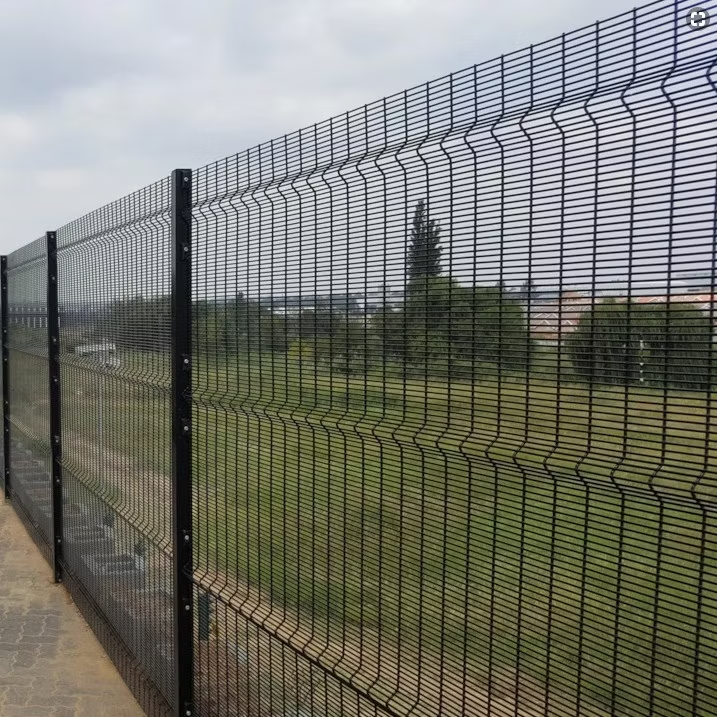
Why Fence Height Matters
Choosing the right fence height is essential for achieving the desired balance between security, privacy, and visual appeal.
Security Considerations
Fence height affects how effective the barrier is at deterring intruders. A taller fence can make unauthorized access more difficult, while a Clearview design maintains visibility for surveillance and monitoring. Security professionals often recommend heights that discourage climbing while still allowing sightlines for cameras and personnel.
Privacy Needs
Clearview fencing prioritizes visibility, which may not provide full privacy. However, different height options can enhance partial screening or work in combination with landscaping or privacy screens. For residential properties, taller fences may offer a greater sense of seclusion, while commercial sites may prioritize open visibility for safety and compliance.
Aesthetic Impact on Property Appearance
Fence height influences the overall appearance of a property. A well-proportioned fence complements architectural design and landscaping, while an excessively tall or short fence may look out of place. Clearview fencing’s sleek design helps maintain a modern aesthetic without creating visual clutter.
Local Regulations and Compliance
Many jurisdictions regulate fence height to ensure safety and neighborhood harmony. Restrictions may apply to front-yard and boundary fencing, especially in urban areas. Compliance with local building codes and planning regulations prevents legal issues and ensures a smooth installation process.
Standard Clearview Fence Height Options
Clearview fencing is available in various height options, each suited to different security, privacy, and aesthetic requirements. Selecting the correct height ensures optimal functionality while complying with site-specific needs.
What are the Common Height Options and Best Use Cases
1.2m – Demarcation and Low-Security Applications
This is the shortest standard Clearview fence height and is primarily used for boundary definition rather than high-level security.
Best Use Cases:
- Property demarcation and landscaping boundaries
- Parks and recreational areas
- Internal site divisions
- Areas where visibility and openness are prioritized
Pros:
- Maintains an open, non-restrictive appearance
- Cost-effective compared to taller options
- Ideal for aesthetic and low-security applications
Cons:
- Limited deterrence against climbing
- Not suitable for high-security environments
- Provides minimal privacy
1.8m – Residential Security and Privacy Balance
The 1.8-meter height is one of the most popular choices for residential properties due to its balance between security and visibility.
Best Use Cases:
- Residential perimeter fencing
- Gardens and backyard security
- Home security without blocking sightlines
- Properties requiring moderate privacy
Pros:
- Effective deterrent against casual intrusion
- Maintains Clearview’s visibility advantages
- Provides a balanced security solution
Cons:
- Limited privacy without additional screening
- May not meet requirements for high-security applications
2.1m – 2.4m – High-Security Applications
These taller options are designed for maximum security and are commonly used in commercial and industrial settings.
Best Use Cases:
- Industrial sites and warehouses
- High-security facilities
- Perimeter fencing for sensitive locations
- Areas requiring enhanced intrusion deterrence
Pros:
- Strong deterrence against climbing
- Ideal for high-risk environments
- Enhances security without sacrificing structural durability
Cons:
- Higher material and installation costs
- May require planning permissions in some jurisdictions
- Can create a more imposing visual appearance
Height Selection Summary
| Height | Primary Use | Security Level | Privacy Level |
|---|---|---|---|
| 1.2m | Demarcation | Low | Low |
| 1.8m | Residential | Moderate | Moderate |
| 2.1m | Commercial | High | Moderate |
| 2.4m | High-Security | Very High | High |
Factors to Consider When Choosing Fence Height
Selecting the right Clearview fence height depends on multiple practical and regulatory considerations. A well-informed decision ensures security, compliance, and aesthetic harmony.
Security Needs
Fence height directly influences its security effectiveness.
- Is the property high-risk? High-security sites may require taller fences (2.1m – 2.4m) to deter intrusion.
- Do you need to deter intruders? Taller fences create a stronger physical barrier and reduce climbability.
- Surveillance considerations: Clearview fencing maintains visibility, supporting CCTV monitoring and security patrols.
A balance between height and visibility helps maximize security without compromising monitoring capabilities.
Privacy Requirements
Clearview fencing prioritizes openness, but height selection affects perceived privacy.
- How much visibility is acceptable? Taller fences reduce direct line-of-sight from the outside.
- Neighbor and street exposure: Residential properties may require additional landscaping or screening for privacy.
- Partial vs. full privacy: Clearview fencing offers visibility benefits; if complete privacy is needed, supplementary screening may be required.
Choosing the right height helps strike a balance between security and openness.
Property Location & Environment
Environmental conditions influence durability and structural stability.
- Urban vs. rural settings: Urban areas may prioritize lower heights for aesthetic compliance, while rural sites often allow taller security fences.
- Wind exposure: Higher fences experience greater wind load, requiring stronger posts and foundations.
- Slope and terrain impact: Uneven ground may require stepped or contoured installation to maintain structural integrity.
Environmental factors should guide both height selection and installation methods.
Local Regulations and Permissions
Compliance with legal requirements prevents costly modifications and disputes.
- Zoning laws and height restrictions: Many jurisdictions limit fence height in front yards and boundary areas.
- Planning permissions: Taller fences may require approval from local authorities.
- Homeowner association rules: Residential developments may impose additional design and height restrictions.
Always verify regulations before installation to ensure compliance.
Aesthetic and Neighborhood Compatibility
Security should align with visual harmony.
- Balancing security with appeal: Clearview fencing offers a modern, unobtrusive design that complements most properties.
- Neighborhood compatibility: Excessively tall or imposing fences may conflict with surrounding aesthetics.
- Landscaping integration: Plants and hedges can soften visual impact while enhancing privacy.
A thoughtful design approach improves property appearance and community acceptance.
Cost Implications of Fence Height
Fence height significantly affects material requirements and installation expenses.
How Height Affects Costs
- Taller fences require more materials (panels, posts, and fixings).
- Stronger foundations may be necessary to support increased wind resistance.
- Installation labor costs may rise due to additional structural requirements.
Long-Term Value vs. Upfront Investment
While taller fences have higher initial costs, they often provide superior security and durability, reducing the likelihood of future upgrades.
Budget-Friendly Tips
- Choose the minimum height that meets security requirements.
- Consider phased installation (expanding height later if needed).
- Use standard panel sizes to reduce customization expenses.
Investing in the right height upfront can deliver long-term savings and enhanced security.
Practical Recommendations by Use Case
Different environments require tailored solutions.
Residential Properties
- Recommended height: 1.8m
- Best for: Security and privacy balance
- Additional options: Landscaping or privacy screening for enhanced seclusion
Commercial Premises
- Recommended height: 1.8m – 2.4m
- Best for: Perimeter security and access control
- Considerations: CCTV integration and access points
Schools and Industrial Sites
- Recommended height: 2.1m – 2.4m
- Best for: High-security applications and risk mitigation
- Benefits: Strong deterrence while maintaining visibility for monitoring
Perimeter Security vs. Boundary Demarcation
| Use Case | Recommended Height | Security Level | Primary Purpose |
|---|---|---|---|
| Demarcation | 1.2m | Low | Boundary definition |
| Residential Security | 1.8m | Moderate | Privacy and protection |
| Commercial Security | 2.1m | High | Intrusion deterrence |
| High-Security Sites | 2.4m | Very High | Maximum protection |
Common Mistakes to Avoid
Selecting and installing Clearview fencing requires careful planning. Avoiding these common mistakes helps ensure long-term security, compliance, and structural durability.
Choosing Too Low for Security Needs
A fence that is too short may fail to provide adequate security.
- Low heights may allow easy climbing or unauthorized access
- Security requirements should dictate height selection
- Consider potential future risks when choosing a height
Solution: Assess security needs and choose a height that deters intrusion while maintaining visibility.
Ignoring Local Regulations
Failure to comply with local rules can result in penalties or forced modifications.
- Many jurisdictions impose height restrictions
- Planning permissions may be required for taller fences
- Homeowner associations may have additional rules
Solution: Verify zoning laws and regulatory requirements before installation.
Overlooking Wind and Environmental Factors
Environmental conditions impact structural stability.
- Higher fences experience greater wind resistance
- Strong posts and proper foundations are essential
- Uneven terrain may require specialized installation
Solution: Choose materials and installation methods suited to local environmental conditions.
Focusing Only on Price
The cheapest option may not provide long-term value.
- Low-cost materials may compromise durability
- Insufficient height could require future upgrades
- Structural quality affects maintenance and lifespan
Solution: Consider long-term security and durability rather than just upfront costs.
Conclusion
Selecting the proper Setting the height of a clearview fence requires balancing security, visibility, privacy, and local compliance with regulations in addition to aesthetics. Whether you are guarding a school, business, residential home, or industrial site, choosing the right height guarantees that your property stays safe without sacrificing appearance or usefulness. For expert advice, quality materials, and professional installation, consider working with Prime Car Shades Kenya.