Car shades are an essential investment for Kenyan homeowners, helping protect vehicles from the intense sun, UV damage, dust, and occasional rain. This article compares Portable Car Shades vs Permanent Car Shades based on features, advantages, disadvantages, installation requirements, and ideal scenarios, helping homeowners in Kenya make an informed decision that fits their budget, climate, and parking needs.
Portable Car Shades vs Permanent Car Shades
What Are Portable Car Shades?
Portable car shades are lightweight, movable structures designed to provide temporary or flexible protection for vehicles. They are ideal for homeowners who need shade in different locations or want an easy-to-store solution.
- Materials: Typically made from fabric canopies, aluminium or steel frames, and collapsible mechanisms.
- Portability: Can be easily relocated, folded, or stored when not in use.
- Setup: Minimal tools required, often a one-person setup.
Types of Portable Shades
- Pop-up tents: Quick assembly, often used for short-term parking.
- Foldable canopy shades: Larger coverage, collapsible for storage.
- Magnetic or clip-on roof shades: Attach directly to the car roof for instant protection.
- Umbrella-style car covers: Single-car coverage, often used for outdoor parking on sunny days.
What Are Permanent Car Shades?
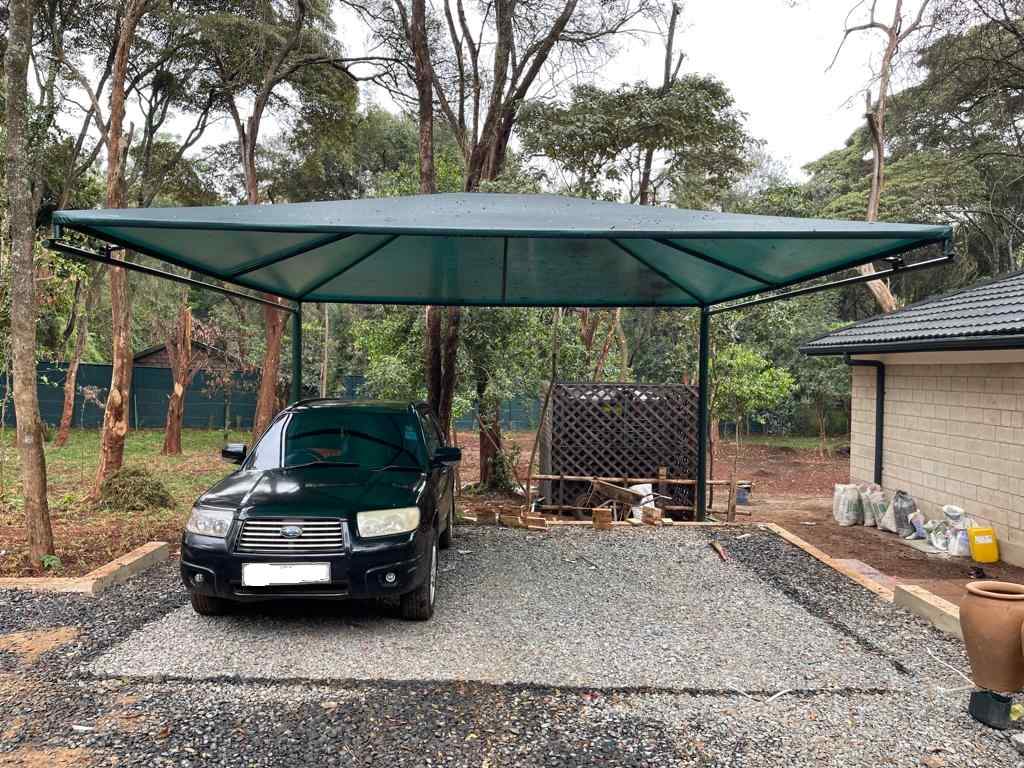
Permanent car shades are fixed structures built into the ground, designed for long-term protection and durability. They provide more robust coverage and are suitable for homes, gated communities, and commercial parking areas.
- Materials: Steel or aluminium frames combined with HDPE or PVC shade fabric.
- Stability: Anchored into concrete foundations for resistance to wind and weather.
- Longevity: Designed to last several years with minimal maintenance.
Common Designs
- Cantilever shades: Modern, open-sided design ideal for single or double bays.
- Dome/arch shades: Curved design providing good water runoff and aesthetic appeal.
- Sail/tensile shades: Stylish, triangular or multi-bay designs suitable for larger compounds.
- Double-bay and multi-bay structures: Cover multiple vehicles with a single continuous shade structure.
Pros and Cons of Portable Car Shades
Pros
- Affordable: Lower upfront cost compared to permanent structures.
- No installation required: Can be set up quickly without professional help.
- Travel-friendly: Ideal for temporary parking, events, or trips.
- Easy storage and transport: Can be folded and stored when not in use.
Cons
- Limited durability: Fabrics and frames may wear out quickly.
- Lower wind resistance: Can be blown away or collapse in strong winds.
- Minimal heat and UV protection: Provides less cooling and sun protection than permanent shades.
- Short lifespan: Typically lasts only a few years with regular use.
Pros and Cons of Permanent Car Shades
Pros
- Durable and strong: Withstands harsh weather, including wind and rain.
- High heat and UV protection: HDPE or PVC fabrics reduce cabin temperature and protect vehicle interiors.
- Adds property value: Enhances home aesthetics and long-term investment.
- Customizable: Can be built to fit specific yard sizes, number of vehicles, and preferred design.
- Long-term outdoor exposure: Designed to last several years with minimal maintenance.
Cons
- Higher initial cost: Requires more investment upfront.
- Requires installation space: Needs proper ground and planning.
- Time-consuming installation: Fabrication, foundation work, and curing take several days.
- Immovable: Once installed, the structure cannot be relocated.
Performance Comparison
Heat Reduction
- Permanent shades: HDPE or PVC fabrics provide superior cooling by reflecting sunlight and allowing airflow beneath the structure.
- Portable shades: Offer mild heat protection, enough for temporary parking, but less effective during peak sun hours.
UV Protection
- Permanent shades: Block approximately 90%–98% of harmful UV rays, protecting car paint and interiors.
- Portable shades: Limited UV efficiency; fabrics may degrade faster under prolonged sun exposure.
Wind Resistance
- Permanent shades: Steel or aluminium frames anchored into concrete withstand strong winds.
- Portable shades: Lightweight structures are vulnerable to wind damage and may require anchoring or removal during storms.
Aesthetic & Property Value
- Permanent shades: Enhance curb appeal and can increase property value with modern designs.
- Portable shades: Functional but offer no long-term aesthetic improvement.
Pricing Differences
Portable Car Shade Costs
- Typical Kenyan price ranges: KSh 8,000–KSh 40,000 depending on size, material, and brand.
- Factors affecting cost include coverage area, fabric quality, frame type, and portability features.
Permanent Car Shade Costs
- Cost per bay: KSh 40,000–KSh 120,000 for cantilever, dome, or sail designs.
- Factors affecting price include steel thickness, fabric type, design complexity, and site preparation (foundation and leveling).
Long-Term Cost Comparison
- Portable shades: Lower initial cost but may require frequent replacement every 2–5 years.
- Permanent shades: Higher upfront cost but minimal recurring expenses, offering better long-term value and durability.
Which Option Suits You?
Best for Homeowners
- Permanent shades are ideal for daily parking and long-term protection. They provide consistent UV and heat protection, durability, and enhance property aesthetics.
Best for Renters
- Portable shades work well for renters or those unable to build permanent structures. They offer flexibility and easy relocation without construction permits.
Best for Outdoor Events & Travel
- Portable shades are perfect for temporary parking, camping trips, or events where mobility and quick setup are essential.
Best for Businesses & Apartments
- Permanent shades suit multi-vehicle parking areas such as commercial offices, apartments, and gated communities. They ensure long-term coverage, durability, and improved aesthetics for multiple vehicles.
Expert Recommendation
- Choose portable shades if mobility, temporary use, or lower upfront cost is a priority.
- Opt for permanent shades if you want long-term investment, high durability, excellent heat and UV protection, and minimal ongoing maintenance.
- Consider safety and convenience: permanent shades are anchored and stable during storms, whereas portable shades may need removal in high winds.
Conclusion
Both portable and permanent car shades offer distinct advantages depending on your needs. Permanent shades excel in long-term protection, durability, and property enhancement, while portable shades offer affordability, flexibility, and ease of use.
Selecting the right shade depends on your parking habits, property type, budget, and climate. By understanding the differences, homeowners, renters, and businesses in Kenya can make an informed choice that balances protection, cost, and convenience.